- Destination guide
- Jamaica
- Caribbean
What to pack for Jamaica
Light clothes, yes. But also a layer for the hills, something for the rain, and the small things that make the island easier.
 By JPott Studios
About 6 minutes to read
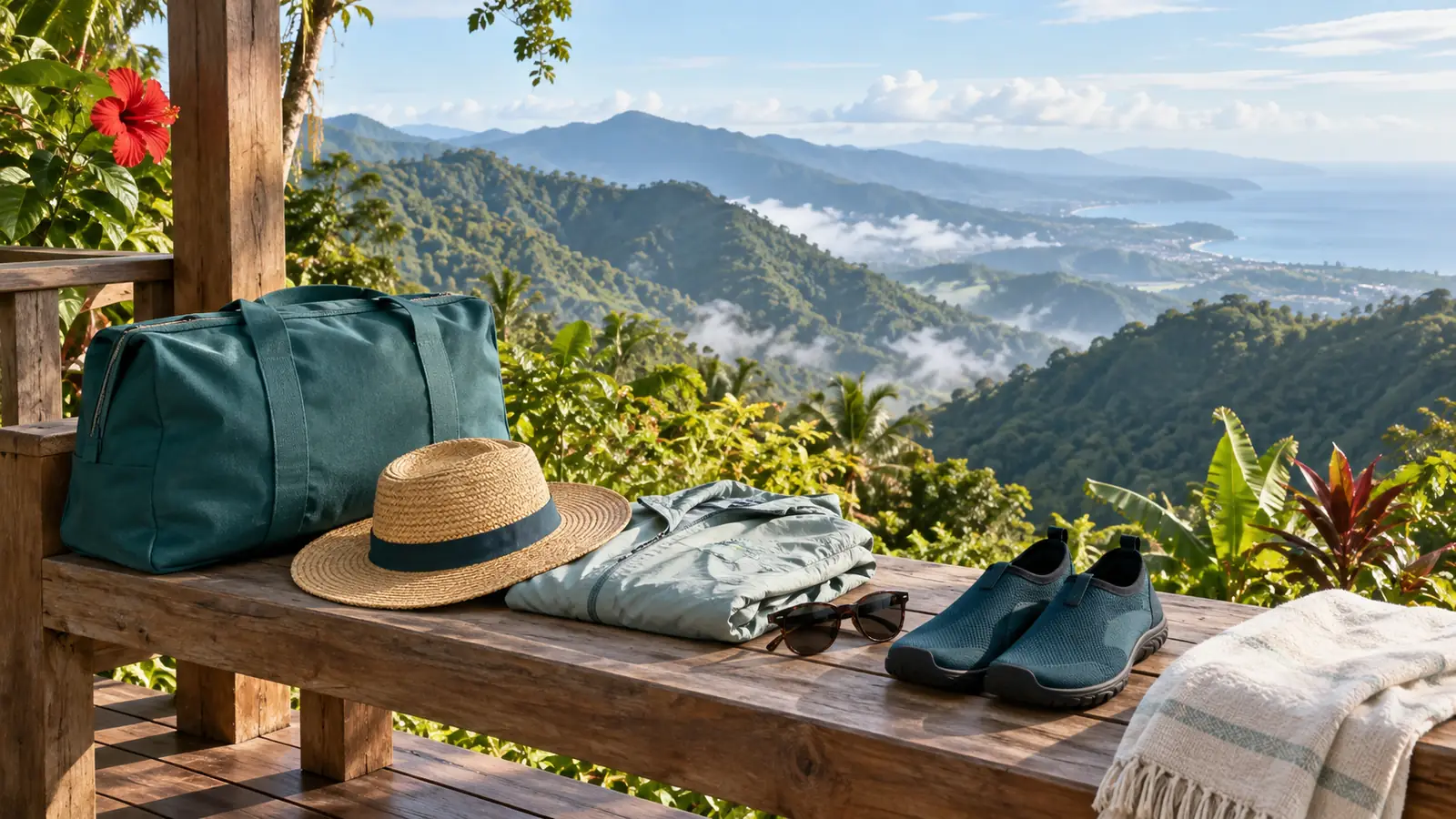
What to pack for Jamaica comes down to light, breathable clothes, strong sun protection, insect repellent and water shoes, plus three things most lists miss: a warm layer for the hills, something for the rain, and one nicer outfit for going out. Add a plug adapter if you're not coming from North America, and you're most of the way there.
We make Neatly Packed here in Jamaica, so this one is close to home. "Swimsuit and sunscreen" covers a beach day. It doesn't cover a chilly sunrise in the Blue Mountains, a September downpour, or a Sunday dinner where everyone else has dressed up. Here's the fuller list, with the reasons behind it.
When are you going?
Jamaica is warm all year, but the months still change what you pack.
December to April is the drier, busier season. Days usually sit around 22 to 31°C and the air feels a little less sticky. May to November is hotter and wetter, often up to about 33°C. The rain tends to peak twice, around May and June and again from September to November, and it usually comes as a short, heavy afternoon shower that clears quickly.
The Atlantic hurricane season runs from 1 June to 30 November, and the busiest stretch is roughly mid August to mid October. Most trips in those months go ahead without any trouble. Still, get travel insurance that covers weather disruption, and keep an eye on the US National Hurricane Center's tracker in the days before you fly and while you're here.
Jamaica's year at a glance
Warm all year, with two quite different seasons.
Drier season, about 22 to 31°C
Wetter season, often up to about 33°C
Hurricane risk highest
What clothes to pack for Jamaica's heat
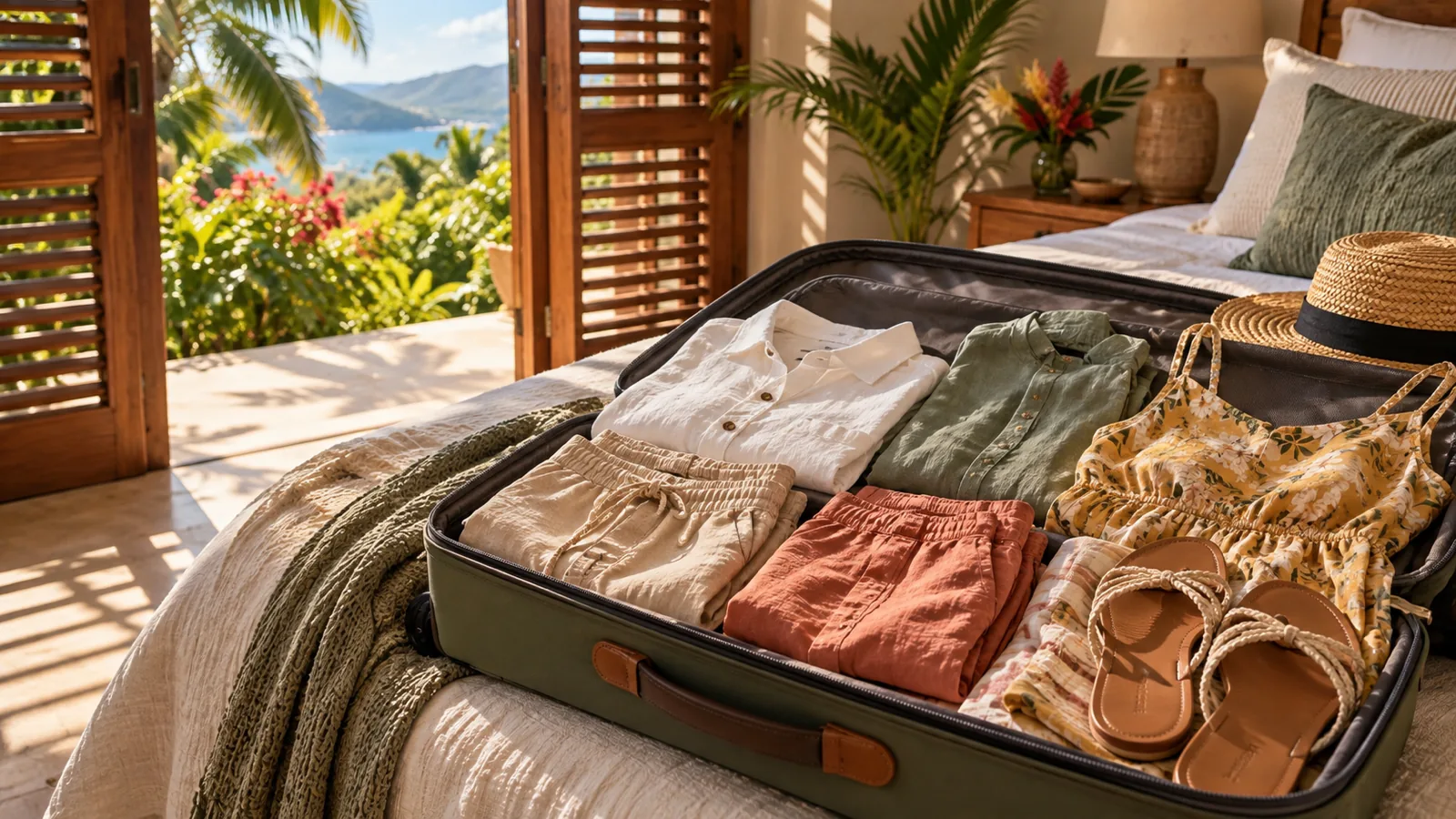
Go light, loose and breathable. Cotton and linen will keep you comfortable; synthetic fabrics that trap heat will have you changing by lunchtime.
- Light tops and t-shirts, one per day plus a spare, or fewer if you plan to wash
- Shorts, light trousers, skirts or sundresses
- Swimwear, two if you swim every day, so one can dry
- A cover-up or shirt to wear over swimwear
- Cool sleepwear, since not every room is air conditioned
- Sandals or flip flops, plus comfortable closed shoes for walking and hiking
- A sun hat and sunglasses
If you'd like to fit all of that into one cabin bag, our carry-on packing list for a week shows the counts that make it work.
Dress for town, not just the beach
Swimwear is for the beach and the pool. In town, in shops, markets and restaurants, pull a shirt or dress on over it. People here tend to dress neatly when they go out, and you'll feel more at ease if you do too.
Bring at least one nicer outfit. Some resort restaurants have an evening dress code, such as long trousers and closed shoes for men, so ask your hotel. If you might go to church, a modest, smart outfit is the norm.
And leave anything in camouflage print at home. Here, as on several Caribbean islands, camouflage is kept for the security forces, and visitors wearing it can be asked to change. That includes camo bags, hats and children's clothes.
Do you need a jacket in Jamaica?
It sounds odd for a tropical island, but yes, pack one warm layer. The Blue Mountains are much cooler than the coast, and if you hike to the peak for sunrise it can feel properly cold before dawn. A fleece or jumper, long trousers and a light rain jacket make that walk far nicer.
You'll use the layer lower down too. Planes, buses and some restaurants run the air conditioning very cold. In the wetter months, a packable rain jacket or a compact umbrella can save an afternoon.
Sun, sea and mosquitoes
The sun is strong all year, on cloudy days and out on the water as well.
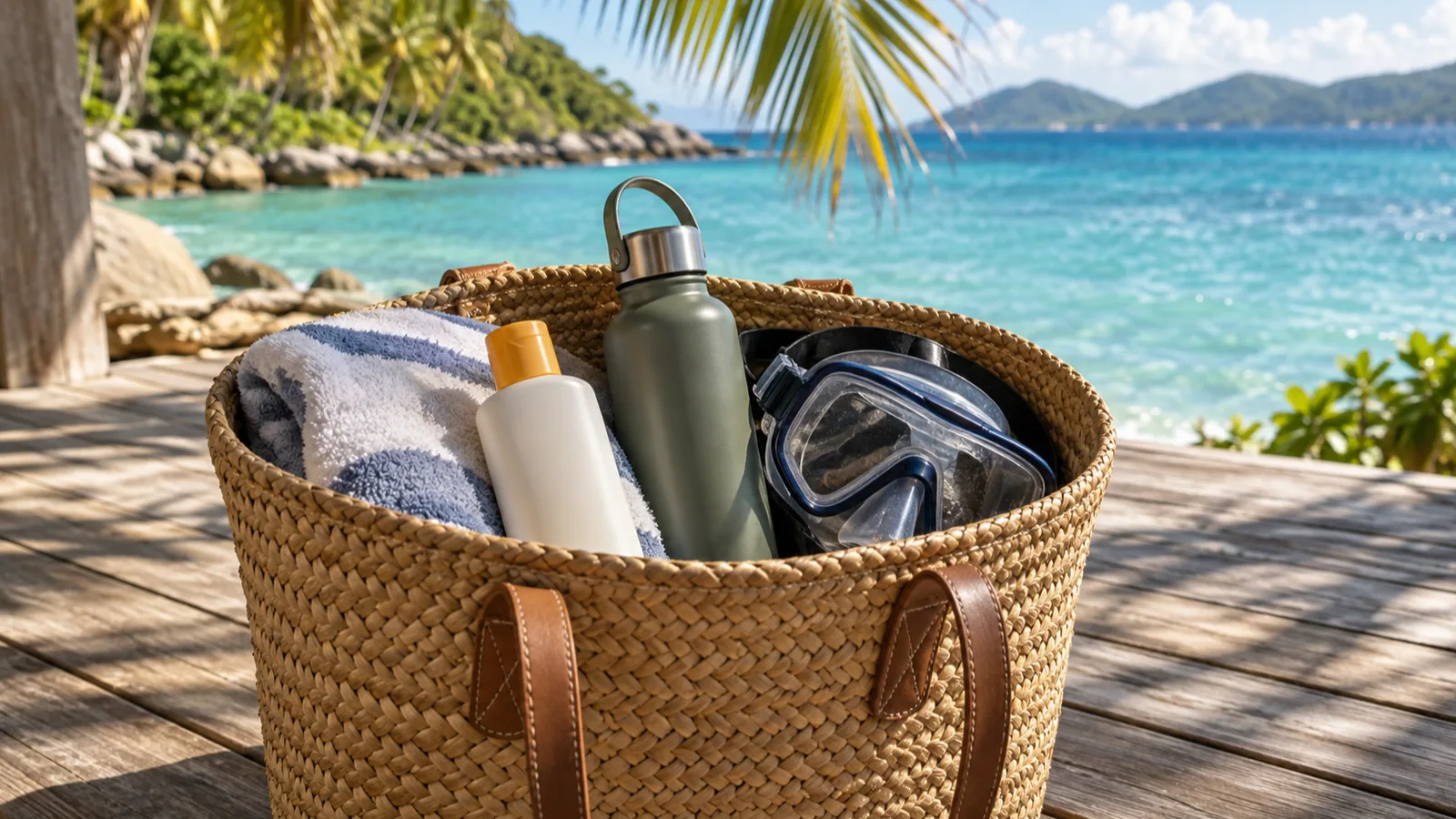
- Reef-safe sunscreen, a high factor, and plenty of it
- After-sun or aloe for the evening you forgot to reapply
- Insect repellent, ideally with DEET, for dusk near the coast
- Water shoes, especially for Dunn's River Falls and rocky beach entries
- A waterproof pouch for your phone on boat trips and river days
- Your own snorkel mask, if you care about the fit
Reef-safe sunscreen is worth the effort because many of the reefs you might snorkel over are fragile, and research suggests some common sunscreen ingredients can harm coral. A mineral sunscreen is the simple choice. If you're flying with hand luggage only, our guide to packing a carry-on toiletry bag covers how much sunscreen you can take through security.
Mosquitoes are busiest around dawn and dusk. Illnesses they carry, such as dengue, do occur in the Caribbean, so check your own government's travel health advice before you come. This is general information, not medical advice.
What plug does Jamaica use?
Jamaica uses Type A and Type B sockets, the flat-pin plugs you'd find in the United States and Canada. The supply is about 110 volts at 50 Hz.
Coming from the US or Canada, your plugs will usually fit as they are. From the UK, Europe and most other places, bring a Type A/B adapter. Then check the small print on each charger: most phone and laptop chargers say "100 to 240V" and work anywhere, but hair dryers and straighteners often don't. Bring a dual-voltage one, or leave it at home and use the hotel's.
Will my plug work in Jamaica?
- From the US or CanadaUsually fits as it isType A and Type B sockets, the flat pins you already use.
- From the UK, Europe or elsewhereBring an adapterA Type A/B adapter for your plugs.
- Any chargerRead the label"100 to 240V" works anywhere. Hair dryers and straighteners often do not.
A power bank helps on long days out. Download offline maps before you arrive, because signal can drop on mountain roads and in the countryside.
From JPott Studios
One calm email a month
One useful tip, one free printable or tool, and a short note from our apps. Join and get the free welcome pack: printable trackers, a packing list maker and more.
Money: Jamaican dollars or US dollars?
The local currency is the Jamaican dollar. US dollars are widely taken in tourist areas, but your change will often come back in Jamaican dollars, and paying in local money usually works out a little better.
Cards are fine in hotels, supermarkets and bigger restaurants. For jerk stands, markets, route taxis, tips and roadside fruit, carry some cash in small notes. Tell your bank you're travelling so your card isn't blocked.
Documents and health
- Passport, valid for the whole of your stay
- Return or onward ticket details, since you may be asked for them
- Travel insurance details, saved offline
- Driving licence, if you plan to rent a car (Jamaica drives on the left)
- Any medication you take, in its original packaging, with a few days' spare
- Something for motion sickness if you get carsick, as mountain and coast roads can wind a lot
- A small first aid kit: plasters, antiseptic, rehydration sachets
- A reusable water bottle
Entry rules depend on your passport and they do change, so check the official Jamaican government guidance and your own government's travel advice before you book. That includes whether there's an arrival form to fill in online before you fly. For anything medical, ask a pharmacist or doctor.
A few kind habits
Say "good morning" or "good afternoon" before you ask someone a question. It's expected here and warmly received. And ask before you photograph people, because a picture taken without asking can genuinely offend.
As in any capital, after dark in Kingston it's sensible to stick to areas your hotel recommends and use a taxi they trust.
The Jamaica extras, in one place
On top of your usual clothes and toiletries:
- Reef-safe sunscreen, sun hat, sunglasses
- Insect repellent
- Water shoes
- One warm layer
- Rain jacket or compact umbrella (May to November)
- A cover-up for town, and one nicer outfit
- Type A/B plug adapter, if you're not coming from North America
- Some Jamaican dollars in small notes
- Motion sickness remedy, if you need one
Want it as a checklist? Our free printable packing list maker counts your clothes for your nights and weather. And if you choose Jamaica as your destination in Neatly Packed, the app adds the island's extras to your list for you: a Type A/B plug adapter and insect repellent, plus reef-safe sunscreen and water shoes when you plan beach days. It also shows the season for your travel month and links to the hurricane tracker.
Visiting more than one island? Our Caribbean island packing list covers the plugs, money and laws that change from place to place. Coming for a wedding trip? The honeymoon packing list has the couple's version. Arriving by ship? Start with the cruise packing list.
From JPott Studios
One calm email a month
One useful tip, one free printable or tool, and a short note from our apps. Join and get the free welcome pack: printable trackers, a packing list maker and more.