- Packing guide
- Baby and toddler
- Family travel
Baby and toddler travel packing list: what you really need
Little people need a surprising amount of stuff, but far less than the pile by the front door suggests.
 By JPott Studios
About 6 minutes to read
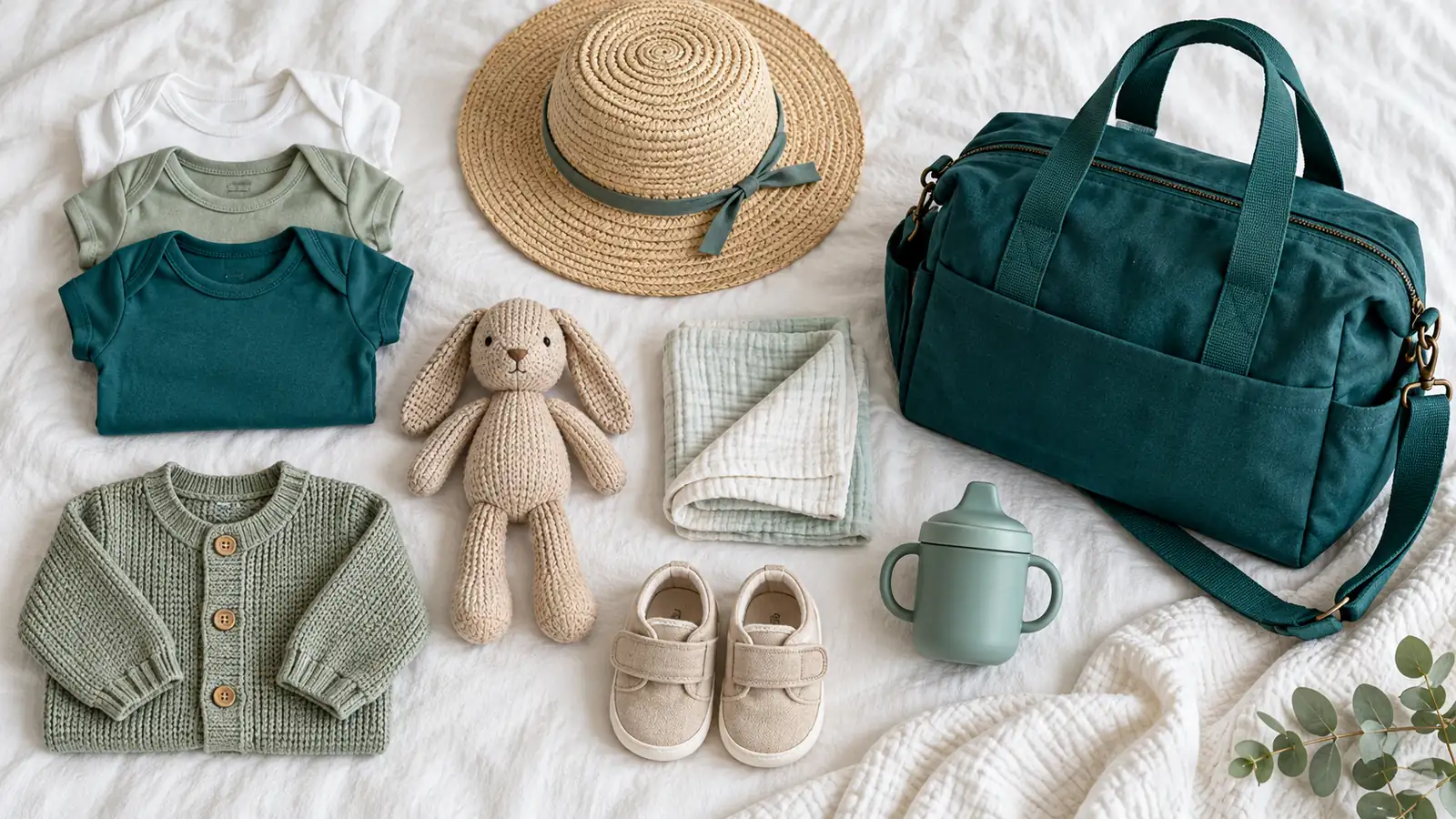
Count what your child uses on a normal day at home, multiply by the days you'll be away, and add one extra day for the journey. That one rule turns a baby and toddler travel packing list from a guessing game into a short, calm job. If you can buy nappies where you're going, the pile shrinks even more.
The first trip with a little one can feel like moving house. Most of the stress comes from not knowing how much is enough, so once you have a way to count, the packing gets calmer.
This list covers babies and toddlers up to about three. Take what fits your child and skip the rest. You know them best.
How to count the things that run out
Nappies, wipes, bottles and pouches are the things that run out, so work them out from your own child rather than a generic list. Travel days almost always use more, which is why that extra day matters.
The counting rule
Can you buy them where you are going? Then pack enough for the journey and the first couple of days.
Then ask one question: can you buy these where you're going? For most destinations the answer is yes, so you only need enough for the journey and the first couple of days. That can free up half a suitcase. If you're going somewhere remote, or your child needs a particular brand or formula, pack the whole amount.
Clothes
Little ones go through clothes much faster than adults do. As a starting point, plan on two outfits a day for a baby, plus a sleepsuit for each night, and about one and a half outfits a day for a toddler, plus pyjamas.
Outfits per day, as a starting point
Outfits a day, plus a sleepsuit for each night.
Outfits a day, about, plus pyjamas.
Choose clothes that layer, dry quickly and don't mind a stain.
What goes in the travel day bag?
This is the bag that stays with you on the plane, train or car. Everything else can go in the suitcase, but not this.
- Nappies for the whole journey, plus a few extra for delays
- Wipes, nappy bags and a fold-up changing mat
- A full change of clothes for your child, and ideally a spare top for you
- Milk, formula, bottles or food for the journey, plus extra for delays
- Snacks, and then a few more snacks
- A sippy cup or bottle for water
- Muslin cloths or bibs
- A light blanket, since planes and air conditioned rooms get cold
- Comforter or favourite toy
- A few small, new-to-them toys, books or sticker books, handed out one at a time
- Any medication, and a copy of the prescription
- Passports and travel documents for everyone
Many parents find that feeding, or offering a drink or a dummy, during take-off and landing helps little ears with the pressure change. It doesn't work for every child, but it's easy to try.
Going on a cruise? This bag matters even more there, because your suitcase can take hours to reach the cabin. Our cruise packing list covers that first afternoon.
Airport security with baby food and milk
Liquids rules usually make an exception for babies, but the details depend on the country and the airport.
In the UK, you can carry enough baby food, milk, formula and sterilised water for the journey, in containers of up to 2 litres, and your baby needs to be travelling with you for everything except breast milk. Staff may open containers to screen them. In the US, formula, breast milk, toddler drinks and baby food are allowed over the usual 3.4 ounce limit; tell the officer at the start and take them out for separate screening. Other countries differ.
Two things help almost everywhere: tell the security officer at the start that you have baby milk or food, and keep it together in one easy-to-reach bag. Check the guidance for your departure airport, and the one you fly home from, before you travel. Our guide on how to pack toiletries in a carry-on covers the rest of the liquids bag.
Sleep
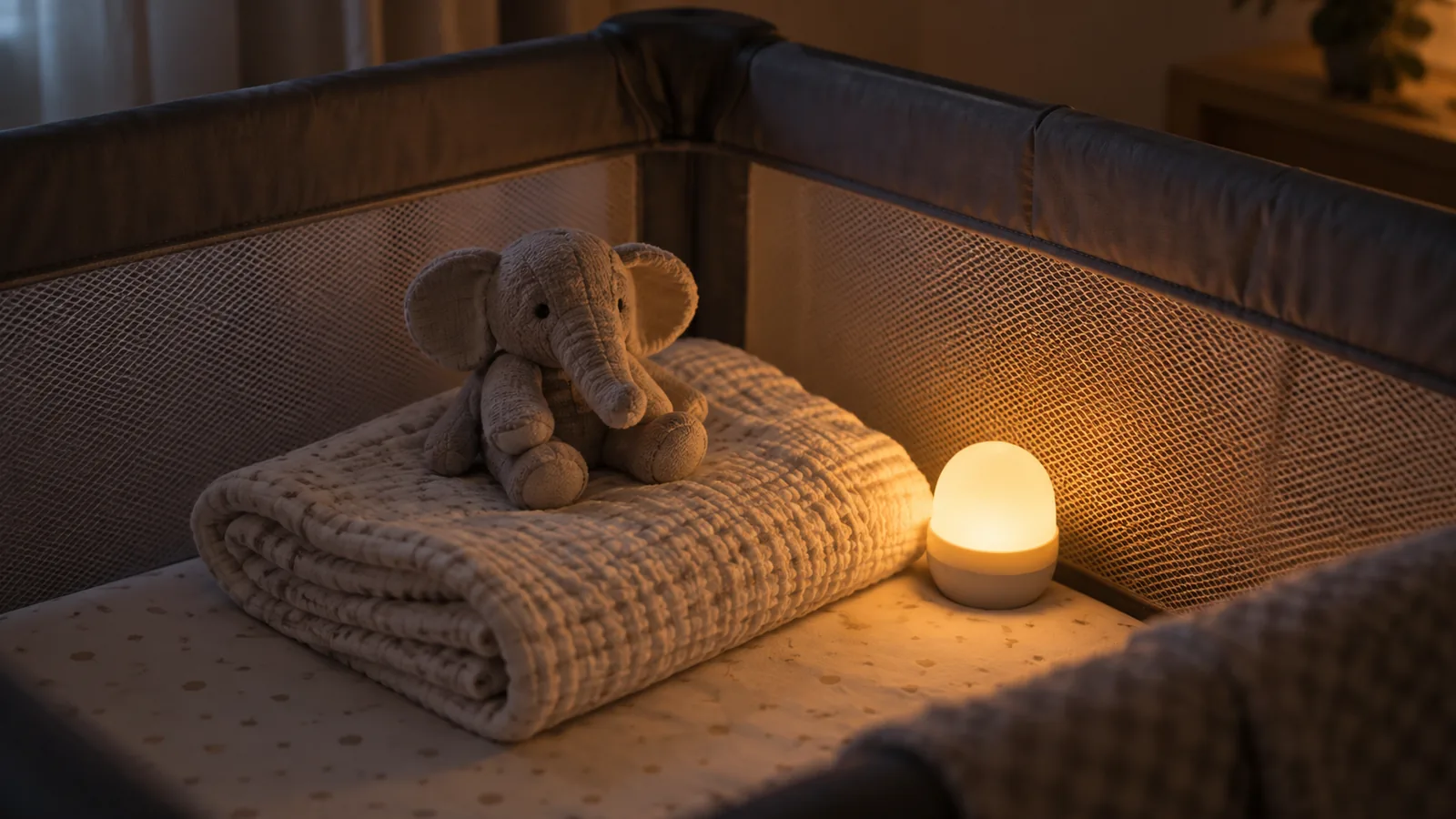
- A travel cot, or a confirmed cot from your hotel (ask when you book, and again before you arrive)
- Your child's usual sleeping bag or blanket
- A familiar comforter and the usual bedtime book
- A portable blackout blind, or a few clips to close gaps in curtains
- A white noise app or small speaker, if you use one at home
- A night light, so you are not searching for a dummy in a strange dark room
Keeping bedtime familiar is one of the most useful things you can pack: the same sleeping bag, the same song, the same book, even in a new place.
Feeding
- Bottles and teats, enough for a day between washes
- Formula, pre-measured into a dispenser for the journey
- Steriliser bags or tablets, if you sterilise
- A small bottle brush and travel washing-up liquid
- Bibs, a soft spoon and a bowl
- A portable high chair or fabric seat harness, for places without a high chair
Health and safety
- A thermometer
- Children's pain and fever medicine suitable for their age, as advised by a pharmacist or doctor
- Rehydration sachets
- Nappy cream
- Baby-safe sunscreen, a wide-brimmed hat and a sunshade for the buggy
- Plasters and antiseptic wipes
- Plug socket covers and a door stopper, if you are staying somewhere not set up for toddlers
Very young babies are usually advised to stay out of direct sun altogether. Ask your health visitor, pharmacist or doctor what's right for your child and destination. This is general information, not medical advice.
From JPott Studios
One calm email a month
One useful tip, one free printable or tool, and a short note from our apps. Join and get the free welcome pack: printable trackers, a packing list maker and more.
Getting around
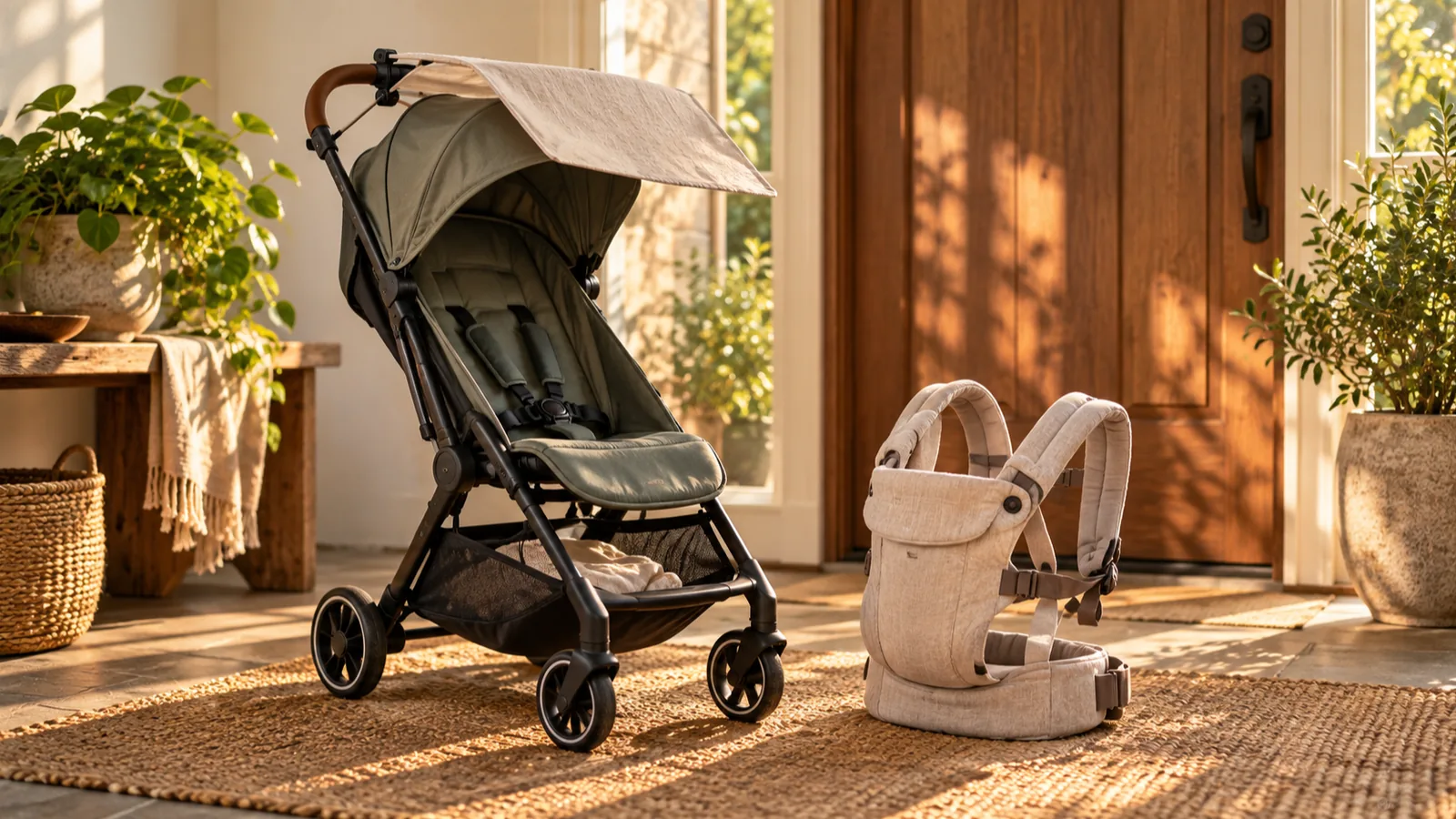
- A lightweight, folding buggy. Many airlines let you take it to the aircraft door, but the rules vary, so check yours
- A baby carrier or sling, for airports, stairs and cobbled streets
- A car seat, if you will be in cars or taxis. Check your airline's rules for bringing one, and whether hire cars include them
Documents
In most countries, babies need their own passport, whatever their age. If only one parent is travelling, or your child has a different surname from you, some countries may ask for extra documents, such as a birth certificate or a letter of consent from the other parent. Check your own government's advice and your destination's entry rules well before you go, because new passports can take weeks.
What you can leave at home
- Most of the toys. A few small ones, rotated, go further than a bagful.
- A full week of nappies, if you can buy them there.
- The big baby bath. A sink or a shower together works fine for a week.
- Anything "just in case" that you haven't used in the last month at home.
One last tip
Pack the night before, not the morning of. And put one small thing in the travel bag that's just for you: headphones, a snack you love, a paperback. You're travelling too.
Neatly Packed counts clothes for your nights and climate, and you can add every baby item on this page to your list yourself so nothing is forgotten on the day. Its liquids and baggage guide also covers baby milk and food, dated so you know how current it is. For a quick printable starting point, try our free packing list maker.
Related guides: How to pack toiletries in a carry-on, what to pack for a Caribbean island trip and what to pack for Jamaica.
From JPott Studios
One calm email a month
One useful tip, one free printable or tool, and a short note from our apps. Join and get the free welcome pack: printable trackers, a packing list maker and more.