- Destination guide
- Hurricane season
- Caribbean
Caribbean hurricane season packing tips, and what to do if a storm forms
Most trips between June and November never meet a storm. A few extra things in your bag and a plan B decided at home mean you can relax either way.
 By JPott Studios
About 7 minutes to read
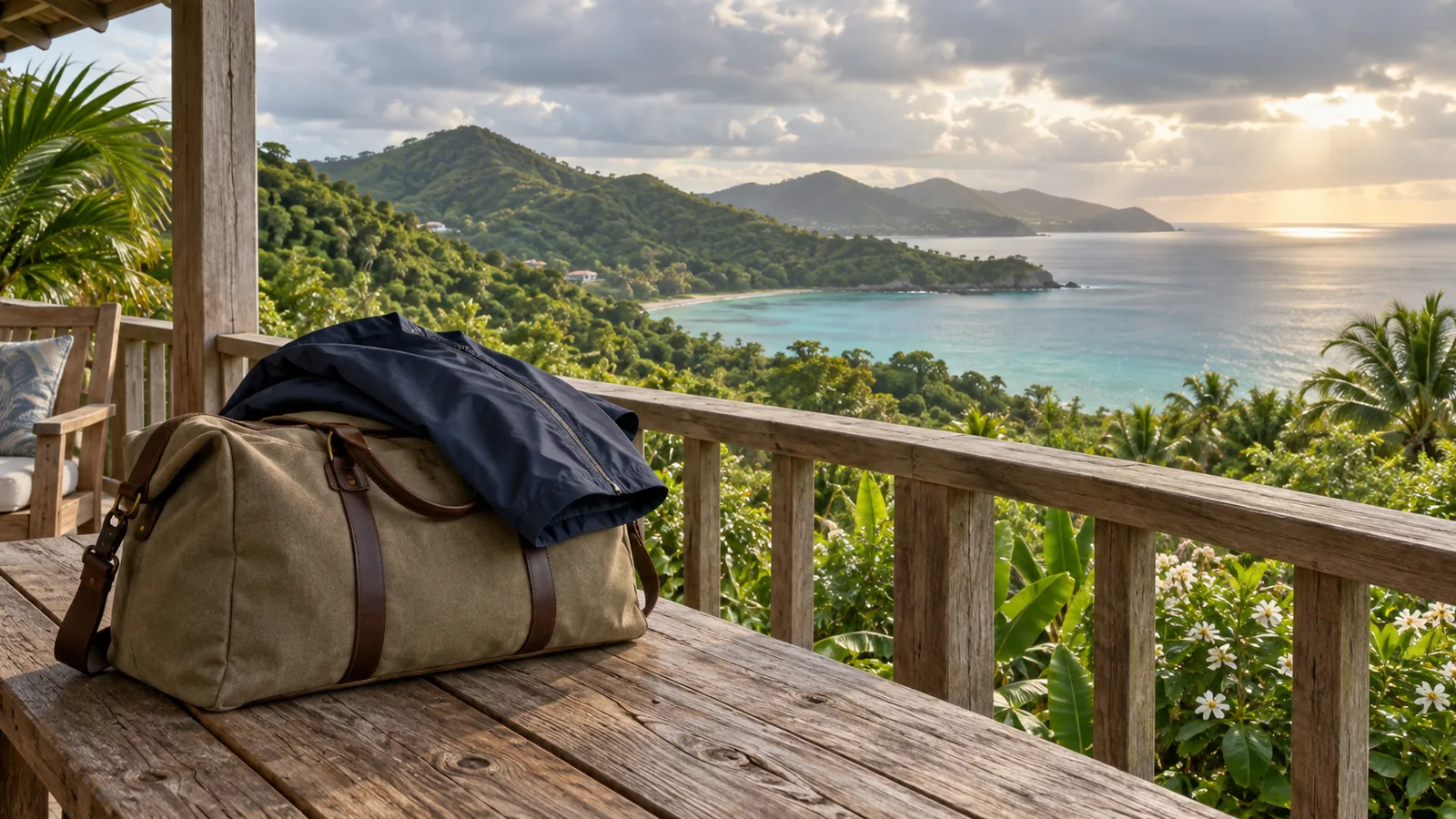
Ten days before your flight, the forecast shows a swirl of cloud far out over the Atlantic. The good news first: for a Caribbean trip in hurricane season, you pack mostly as normal for the heat, then add a small storm kit, sort your documents and insurance early, and know what to do if a storm does form.
We make Neatly Packed in Jamaica, where hurricane season is simply part of the year. Most visitors who come between June and November never see a storm at all. The ones who travel calmly are the ones who packed a few extra things and decided their plan B before they left home.
When is hurricane season in the Caribbean?
The Atlantic hurricane season runs from 1 June to 30 November. It's not the same all the way through. Early summer is usually quiet, the busiest stretch tends to be mid-August to mid-October, and things usually ease off in November.
October still deserves respect, though. Late-season storms often form closer to the islands, in the western Caribbean, which means less warning than the long Atlantic storms of September. If you're travelling in October or November 2026, pack exactly as you would for a peak-season trip.
Keep it in proportion, too. Even in the busiest weeks, most days on most islands are hot, bright and ordinary, with a short afternoon shower. You're packing for a small chance, not a certainty.
The storm-ready extras to pack
These fit into a corner of a carry-on and cost very little. If a storm never comes, most of them still earn their place on a normal rainy day.
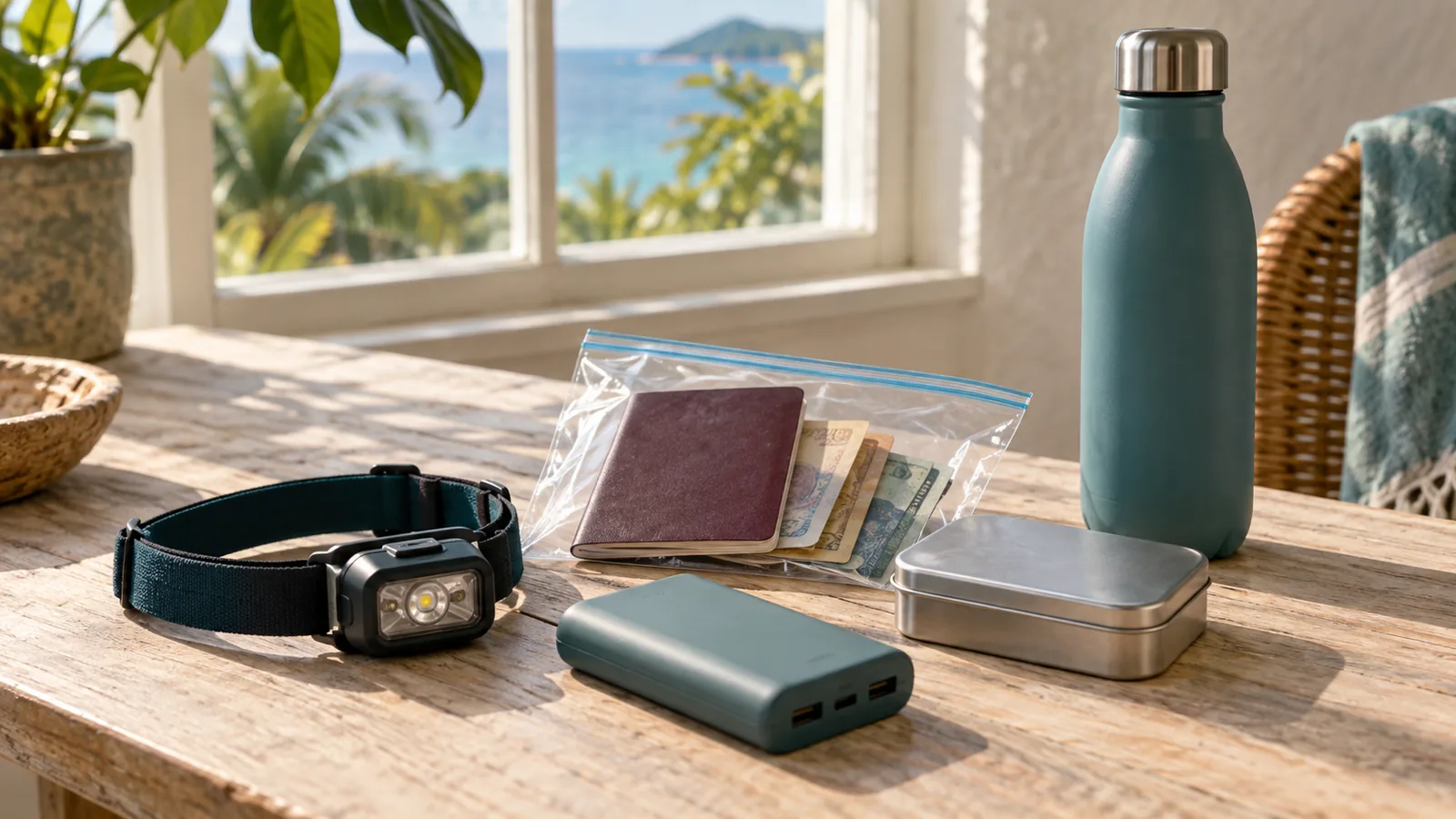
- A small torch or head torch, because power cuts can last longer than a phone battery
- A power bank, charged before you fly and topped up every evening
- Your medication, with at least a week spare, plus a copy of the prescription
- Some cash in small notes, as card machines and cash points need power too
- A few zip bags or a dry bag for your passport, cards and phone
- A refillable water bottle
- A packable rain jacket and one pair of closed shoes that can get wet
- Insect repellent, since standing water after heavy rain brings mosquitoes
- A basic first aid kit with plasters, pain relief and any rehydration sachets you use
- A paper card with key phone numbers, in case your phone dies
Skip the dramatic stuff. You don't need camping gear or a week of tinned food, because hotels and guesthouses in the region have their own storm plans and supplies. Your job is to look after the small, personal things they can't: your medicine, your documents and a way to see in the dark.
Everything else is your usual warm weather bag. Our Caribbean island packing list covers the clothes, sun care and plugs island by island.
Documents and insurance to sort before you go
This is the part that saves the most stress, and it's all done at home.
Buy travel insurance soon after you book
This matters more than anything in your suitcase. Many policies only cover a hurricane if you bought the policy before the storm was given a name. After that, it counts as a known event and you may not be covered for it. Read the sections on weather, cancellation and delays before you pay.
Keep copies somewhere that works offline
Save your passport photo page, insurance policy and emergency number, flight and hotel bookings, and any prescriptions. Keep one copy on your phone that opens without signal, and one paper copy in a zip bag, separate from the real thing.
Tell someone your plans
Share your flight numbers and where you're staying with someone at home. Some governments also let travellers register their trip or sign up for alerts, such as the US Smart Traveler Enrollment Program, Registration of Canadians Abroad, or the UK's travel advice email alerts on GOV.UK.
Watch or warning?
The two words you'll hear on the news, as the US National Hurricane Center uses them.
- A watchStorm conditions are possibleUsually issued about 48 hours ahead. Check your plans, charge everything, and follow the news.
- A warningStorm conditions are expectedUsually issued about 36 hours ahead. Follow your hotel's and the local authorities' instructions.
What to do if a storm forms before you fly
First, don't panic and don't cancel straight away. A storm a week out can change course or fade completely. Here's how the days tend to go, and what to do at each stage.
A storm on the forecast, from home
What to do as your travel day gets closer.
- About a week outWatch, don't actCheck the National Hurricane Center's outlook once a day. Paths change a lot this far ahead.
- Three to five days outRead your airline's alertsAirlines often publish a travel waiver that lets you change dates without a fee.
- Two days outTalk to your hotelAsk about their storm plan and their policy on changing dates.
- If the airline cancelsTake the refund or new flightYou're usually entitled to one or the other, so let them cancel first.
That last point is worth knowing. If you cancel a flight yourself before the airline does, you may lose money you'd have got back. If the airline cancels, a refund or a free rebooking is usually on the table. Your insurer will want to know too, so call them early and keep every email.
If you do go, pack as planned, carry your medication and documents in your hand luggage, and bring a book and snacks for the airport in case of delays.
What to do if a storm is coming while you're there
Hotels in the Caribbean deal with this every year, and staff usually know exactly what to do. Your part is small and practical.
- Follow the instructions of your hotel and the local authorities, even if the sky still looks blue. In Jamaica, that means the Office of Disaster Preparedness and Emergency Management, known as ODPEM, and the Meteorological Service.
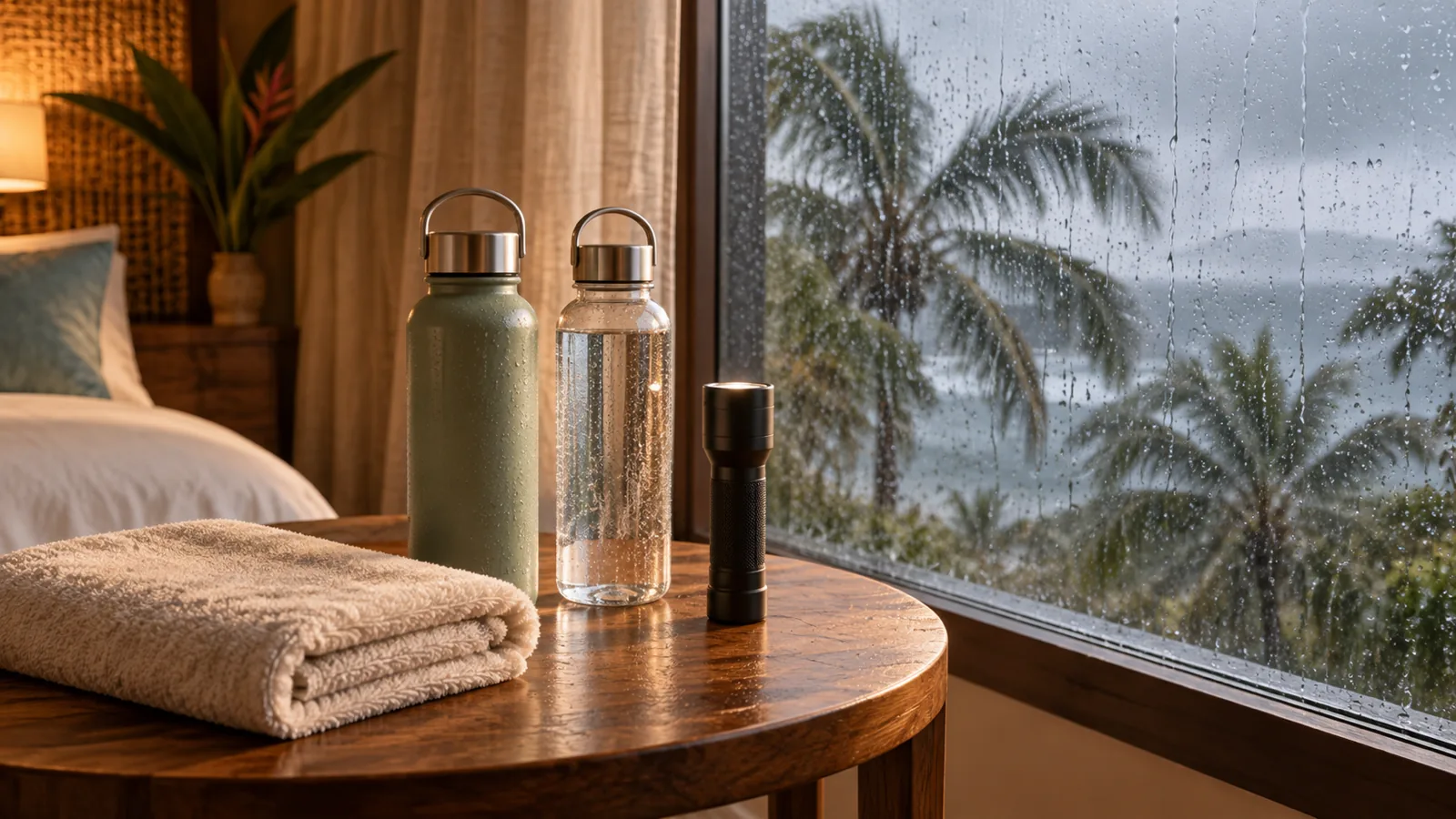
- Charge your phone and power bank, fill your water bottles, and keep your torch by the bed.
- Put your passport, cards, cash and medication in one zip bag that stays with you.
- Stay out of the sea. Rip currents and big waves arrive well before the storm does.
- Call your airline and insurer early, before the phone lines get busy, and tell someone at home you're safe.
Airports usually close before a storm arrives, and the last flights out fill up fast. If you're told to leave early, it's much easier to go while flights are still running than to wait and hope.
From JPott Studios
One calm email a month
One useful tip, one free printable or tool, and a short note from our apps. Join and get the free welcome pack: printable trackers, a packing list maker and more.
What if it just rains?
That's the far more likely story. A typical hurricane season day brings a heavy shower in the afternoon that clears in an hour, and sometimes a grey day or two. Pack for that and you'll be happier whatever happens.
- Quick-dry clothes, so a soaked top is ready again by evening
- A second pair of shoes, so one pair can dry
- A light layer for cool, damp evenings and chilly air conditioning
- One or two indoor plans for a grey day, like a market, a museum or a cooking class
Rain can also reshape a day out. Waterfall and river trips sometimes close after heavy rain, and mountain roads get slippery, so keep those for a clear morning. Heading to Jamaica? Our guide on what to pack for Jamaica covers the hills, the heat and the showers.
Is hurricane season a good time to travel?
For many people, yes. The islands are quieter, hotel prices are often lower, and the sea is at its warmest. Plenty of people plan their trips for these months on purpose.
It suits you best if your dates can move a little, you're happy with a rainy afternoon, and you've bought insurance early. If your trip has one date that can't move, like a wedding, it's worth building in an extra day either side.
Neatly Packed, the packing list app we make, checks the live forecast for about nine days before you go and adds a rain jacket or an umbrella when rain is on the way. It also keeps copies of your tickets and documents stored encrypted with the trip. If you'd rather start on paper, our free printable packing list maker builds a checklist from your nights, weather and plans. And if you're sailing instead, the cruise packing list covers what to bring for port days.
Hurricane season travel questions
When is hurricane season in the Caribbean?
The Atlantic hurricane season officially runs from 1 June to 30 November. The busiest stretch is usually mid-August to mid-October, and storms can still form in late October and November, often in the western Caribbean.
Is it safe to travel to the Caribbean during hurricane season?
Most trips in hurricane season go ahead without a storm coming anywhere near. Plenty of people travel then for the quieter beaches and lower prices. Pack a small storm kit, buy insurance early and keep your plans flexible, and you're well prepared.
What should I pack for a hurricane season trip?
Your normal warm weather clothes, plus a rain jacket, closed shoes, a torch, a charged power bank, some cash in small notes, a week of spare medication and copies of your documents saved offline. A few zip bags keep paperwork and electronics dry.
Does travel insurance cover hurricanes?
Many policies do, but usually only if you bought the policy before the storm was named. Once a storm has a name, it's generally treated as a known event. Read the weather and cancellation sections before you buy, and buy soon after you book.
What happens to my flight if a hurricane is coming?
When a storm threatens, airlines often publish a travel waiver that lets you change dates without a change fee. If the airline cancels your flight, you're usually entitled to a refund or a new flight. Check your airline's travel alerts page before you do anything yourself.
From JPott Studios
One calm email a month
One useful tip, one free printable or tool, and a short note from our apps. Join and get the free welcome pack: printable trackers, a packing list maker and more.