- Packing guide
- Layering
- Weather
How to pack for changing weather without overpacking
Chilly at breakfast, warm by lunch, a shower at four and a cool walk back after dinner. Here's how to be ready for all of it with one bag that still closes.
 By JPott Studios
About 7 minutes to read
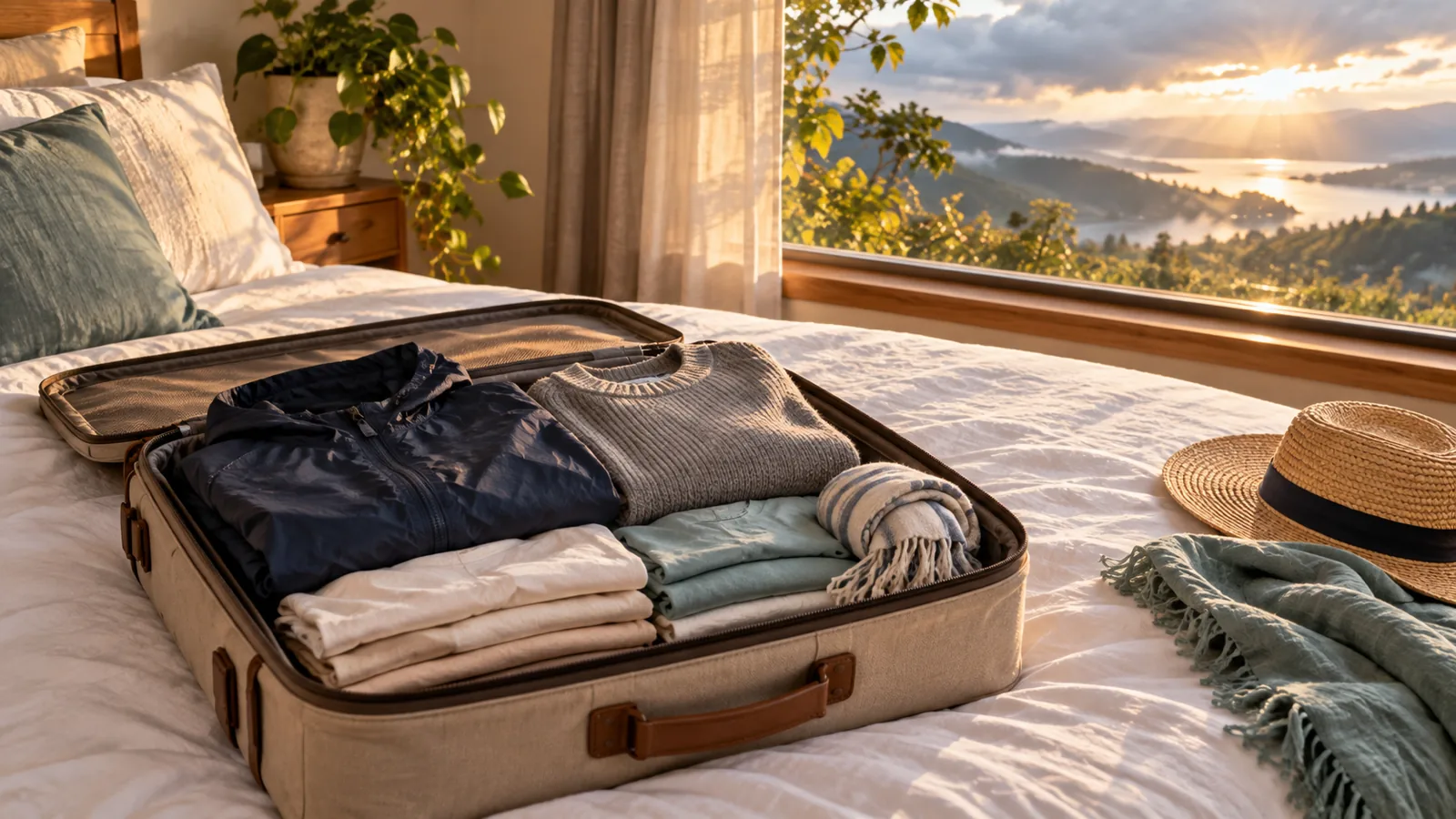
To pack for changing weather, bring three thin layers you can add or peel off, rather than one heavy coat: light tops next to your skin, one warm middle layer like a jumper or fleece, and a packable jacket that keeps out wind and rain. Check the gap between the daily low and high before you pack, not just the headline temperature, and let that gap decide how warm your middle layer needs to be.
That's the whole method. The rest of this guide shows how it plays out across a real day, how many of each layer a week needs, and what to do when the days are hot and the nights are cool.
How to pack for changing weather: think in three layers
Layers work because each one has a single job, and you can wear any combination of them. Thin layers also trap warm air between them, so two light pieces often feel warmer than one thick one, and each is easier to fold.
Three layers, three jobs
- Next to your skinThe base layer
- T-shirts and tops
- One or two long sleeves
- Breathable, quick to dry
- For warmthThe middle layer
- A jumper or fleece
- Or a cardigan, for mild trips
- Goes over any top
- For wind and rainThe outer layer
- A packable rain jacket
- Light enough to carry all day
- Room for the jumper underneath
Add two small extras and you've covered almost any day: a scarf or a light hat, which do a surprising amount for very little space, and one pair of shoes that won't mind a puddle.
Check the gap, not just the high
A forecast that says 22°C sounds like T-shirt weather. But if the same day starts at 9°C, you'll be cold for the first few hours and again after dark. The number to look at is the gap between the low and the high.
- A small gap, a few degrees either way: pack for the average, with one light layer for evenings.
- A big gap, around ten degrees or more: plan for all three layers every day, and make the middle one properly warm.
- Wind or rain on the forecast: the outer layer goes in, whatever the temperature says. Wind makes a mild day feel far cooler than the number suggests.
More than a week or so out, forecasts aren't much use, so look up the usual weather for that month instead, then check the actual forecast again a few days before you fly. Mountains are worth a second look too: air generally gets cooler as you climb, so a hill town or a mountain lodge can feel like a different season from the coast below it.
What does a changeable day look like, hour by hour?
Here's an example of an autumn city break day with a big gap: a cool morning, a warm middle of the day, a short shower and a chilly evening. The clothes stay the same all day. Only the layers change.
One day, one set of clothes, four changes
An example day, not a forecast. The pattern is what matters.
- 8am, cool and brightAll three onTop, jumper and jacket for the walk to breakfast.
- 1pm, warm sunDown to the baseJumper and jacket rolled into your day bag.
- 4pm, a sudden showerJacket back onStraight over your top. Five minutes later, you're dry.
- 8pm, chilly walk homeEverything, plus a scarfThe small extra earns its place.
Notice what makes this work: a day bag big enough to hold a rolled jumper and jacket, and a jacket roomy enough to fit over the jumper. If either of those is missing, you'll end up carrying layers in your arms or going back to the hotel to change.

How many layers to pack for a week of mixed weather
Layers don't mean more clothes. They mean the right few pieces, worn in more ways. For a week with one wash halfway through, a good starting point is:
- Five tops next to your skin, with one or two of them long-sleeved
- Two bottoms plus the pair you travel in, one of them warmer if evenings are cold
- One warm middle layer, or two if nights drop close to freezing
- One packable rain jacket with a hood
- One scarf, and a light hat or gloves if the lows are single figures
- Two pairs of shoes, one of them happy in the wet
- Sleepwear that's warm enough for the coldest night
Keep the colours friendly with each other so every top works under the jumper and every layer goes with both bottoms. That mix and match trick is what turns a handful of pieces into a whole week of different outfits, and our guide to how many outfits to pack for a week does the maths. For the full week's counts, including socks and underwear, our carry-on packing list for a week shows how one wash cuts eight of everything down to five.
If you'd rather not count at all, Neatly Packed has Changeable as one of its weather choices, and close to your trip it checks the live forecast for about nine days, adding a rain jacket, an umbrella or a warm layer when they're needed. Or use our free packing list maker for a quick counted checklist.
Which fabrics handle hot days and cool nights?
The best fabrics for changeable weather do two things: they breathe when it's warm and they dry fast when it rains.
- Merino wool is warm for its weight, breathes well and can be worn more than once before it needs a wash. Good for base or middle layers.
- Light synthetics, like travel tops and fleece, dry quickly after a shower or a sink wash.
- Linen and light cotton are lovely on hot afternoons, but slow to dry, so pair them with a warm layer for the evening.
- Heavy denim is the one to think twice about. Jeans are bulky, cold when wet and take ages to dry, so travel in them if you must bring them.
You don't need special travel clothes to do this. Look through what you already own for thin, light pieces that go together, and leave the chunky knit at home unless the lows are properly cold.
From JPott Studios
One calm email a month
One useful tip, one free printable or tool, and a short note from our apps. Join and get the free welcome pack: printable trackers, a packing list maker and more.
Which layers should you wear to travel?
Wear the bulkiest layers while you travel. Your jumper and jacket take up the most room in a bag, and planes, trains and airports are often cool anyway. Wear your heaviest shoes and warmer trousers too.
Keep the jacket where you can reach it on arrival, rather than buried under everything else. Landing in a cold, wet evening after leaving a warm afternoon is exactly when you'll want it first. For bag sizes and what counts as a liquid, our guide to the toiletry bag and liquids rules covers the airport side.
Packing for hot days and cool nights
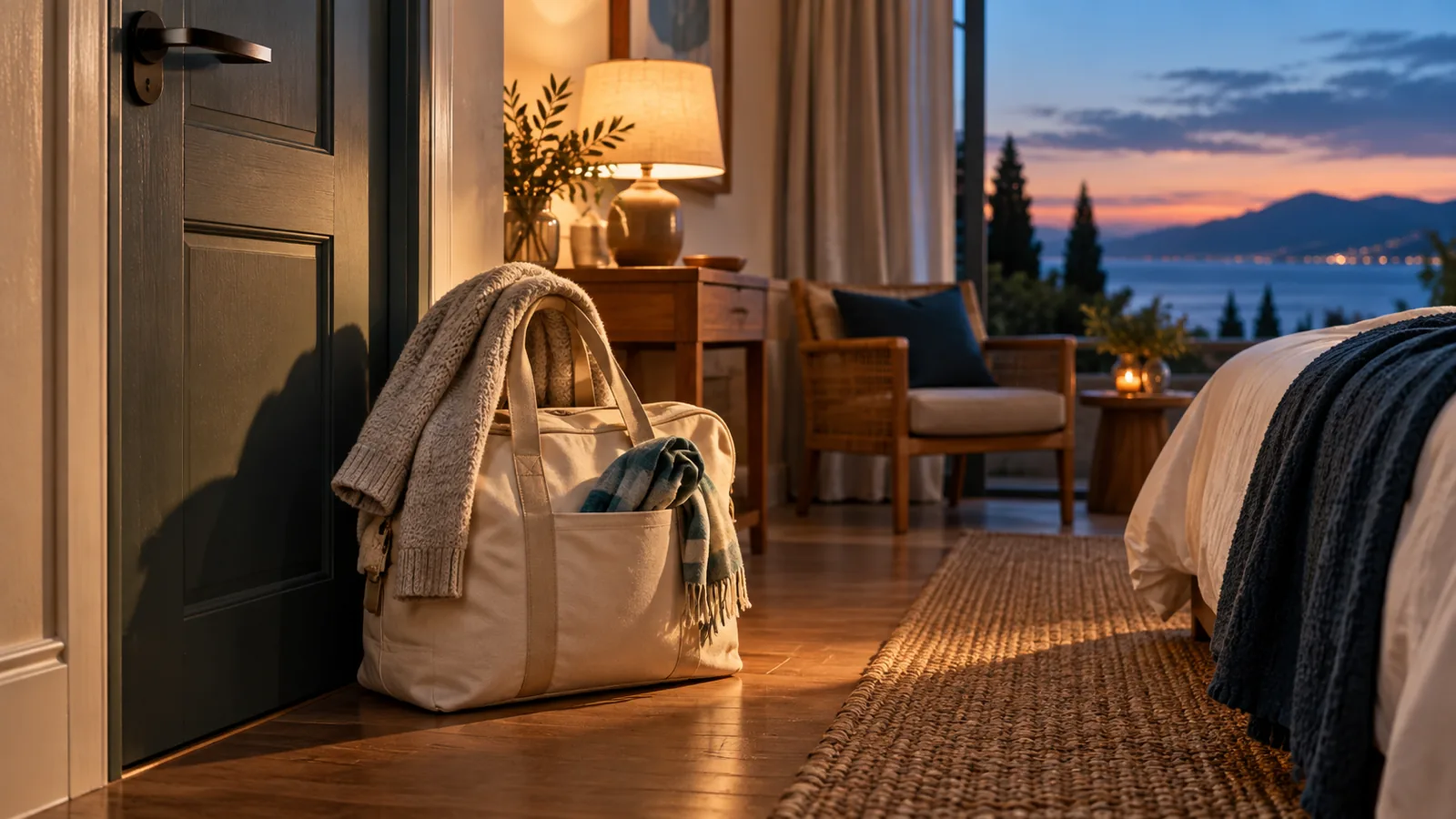
Some places swing hard between day and night: deserts, high plateaus, mountains and some islands once the sun goes down. The layering method still works, but the balance shifts.
- Pack your base layers for the heat: light, loose and breathable, with a long-sleeved top for sun on your arms.
- Make the middle layer genuinely warm, like a fleece, not a thin cardigan. It only has to come out after dark, so one is usually enough.
- Bring a long pair of trousers for evenings, even if you'll live in shorts all day.
- Remember indoor cold. Air conditioning in hotels, restaurants and buses can be fierce in hot places, and a light layer in your day bag saves the evening.
Heading up into the hills from a warm coast? Our guide on what to pack for Jamaica covers the cooler Blue Mountains alongside the beach days, and the Caribbean island packing list has the rain and heat extras for the islands.
Questions people ask
What should I pack for unpredictable weather?
Three layers you can mix: light tops, one warm jumper or fleece, and a packable waterproof jacket. Add a scarf and shoes that can cope with rain. Every outfit then becomes a mix of those pieces, depending on the day.
How do you layer for a big difference between day and night?
Wear a light base layer for the warm part of the day, and carry a warm middle layer and a jacket in your day bag. If the gap is around ten degrees or more, make the middle layer properly warm and bring long trousers for evenings.
Is a rain jacket or an umbrella better for changeable weather?
A packable rain jacket usually wins, because it also blocks wind and keeps your hands free. An umbrella is a nice extra for city trips with heavy rain on the forecast, but it does nothing on a cold, windy evening.
How many jumpers should I pack for a week?
Usually one, worn while you travel. Pack a second only if nights are near freezing or you know it will get wet. A jumper can be worn many times before it needs a wash, especially over a clean top.
When should I check the forecast before a trip?
Look at the usual weather for the month when you start planning, then check the actual forecast in the last few days before you leave. Forecasts more than about a week ahead change a lot, so treat them as a rough guide.
From JPott Studios
One calm email a month
One useful tip, one free printable or tool, and a short note from our apps. Join and get the free welcome pack: printable trackers, a packing list maker and more.