- Packing guide
- Business travel
- Carry-on
Business trip packing list: look ready, carry less
A short trip, a full diary and no time to shop for the thing you forgot. Pack like this and you'll arrive looking ready, with less to carry.
 By JPott Studios
About 6 minutes to read
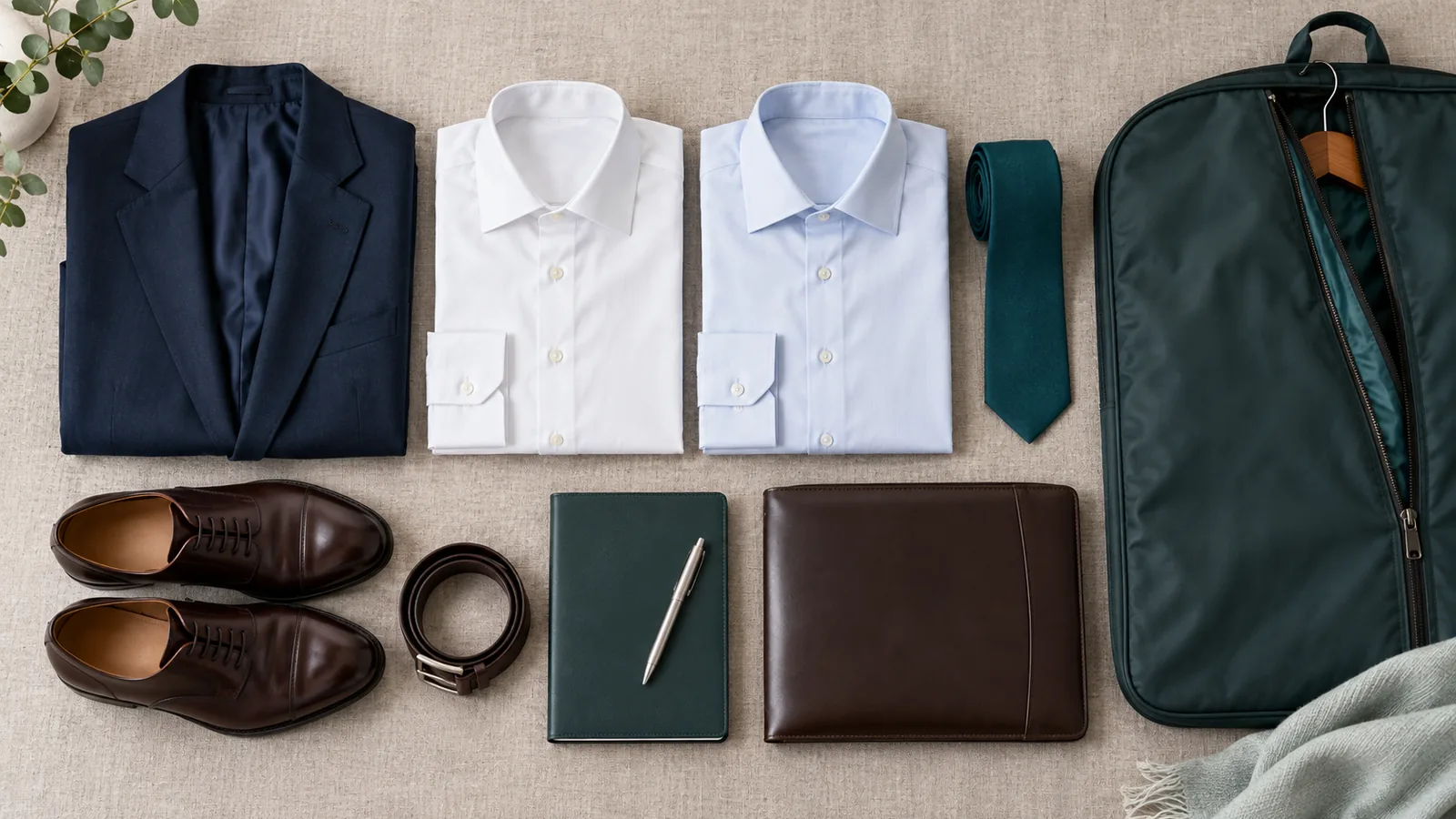
Pack one jacket, two bottoms, a top for each working day plus a spare, two pairs of shoes, and the work kit people forget: laptop charger, screen adapter and plug adapter. That's a business trip packing list for two to four nights, and it fits in one cabin bag if everything shares one or two colours.
Work trips are usually short, but they feel higher stakes than a holiday. A crumpled shirt, a flat laptop or a missing adapter in a client's meeting room is the kind of small thing that follows you around all day. The good news is that they're also the easiest trips to pack for well. The plans are known and the dress code is usually clear.
What to ask before you pack
Start with how many nights, and how many working days. A two-night trip with one day of meetings is very different from five nights at a conference.
Next, the dress code for each part: office, client meeting, conference floor, team dinner, a formal event. Write them down day by day. Then think about what you need to actually work, whether that's presenting from your own laptop, bringing samples, printing documents or taking calls from the hotel.
Answer those and the list mostly writes itself.
Clothes: build around one or two colours
Packing light for work means choosing everything to go with everything. Pick one or two base colours, say navy and grey, or black and camel, and make sure every top works with every bottom. Then one jacket and a few shirts make a week of different-looking outfits.
Two bottoms, three tops, six outfits
When every top goes with every bottom, a small bag goes a long way.
A good starting count for two to four nights
- One jacket or blazer, worn on the plane rather than packed
- Two pairs of trousers or skirts, or one suit plus one spare bottom
- One work top per working day, plus one spare for spills
- One outfit for the evening, if there is a dinner or event
- Something casual for the hotel and the journey home
- Underwear and socks: one per day plus one
- Sleepwear and something to exercise in, if you will use it
- A belt, and any ties, scarves or jewellery the outfits need
For five nights or more, wash rather than pack more. Many hotels have a laundry service, and a light top rinsed in the sink dries overnight.
Shoes are the heavy part
Shoes take the most space, so stick to two pairs if you can: one smart pair that suits every work outfit, and one comfortable pair for travelling and walking. Wear the bulkier pair on the journey. If your smart shoes are new, break them in at home first, and pack a couple of plasters just in case.
The work kit people forget
- Laptop and its charger
- The adapter to connect your laptop to a screen, such as USB-C to HDMI
- Phone charger and a spare charging cable
- Plug adapter for the country you are visiting
- Power bank, in your hand luggage
- Headphones with a microphone for calls
- Slides and documents saved offline, not only in the cloud
- A notebook and pen
- Business cards, if people in your field still swap them
- Your work ID or access badge, if you need it on site
The screen adapter is the one that catches people out. Meeting rooms vary, and the one cable you need is rarely the one on the table, so carrying your own saves a nervous five minutes. Keep the power bank in the bag that stays with you, and check your airline's rules on using it during the flight, which have tightened since March 2026.
Documents and money
- Passport or ID, and any visa or entry paperwork
- Travel and hotel confirmations, saved offline
- Company card and a personal card as a backup
- Travel insurance details, if your employer does not cover you
- An envelope or pouch for receipts
One small habit saves time later: photograph each receipt the evening you get it. Expense claims are much easier when you're not rebuilding a week from a crumpled pile.
Toiletries and small comforts
Keep a compact toiletry kit packed between trips, so you never start from zero. Flying with hand luggage only? Pack it to the strictest liquids rule. Our guide on how to pack toiletries in a carry-on walks you through it.
- A stain remover pen
- A small lint roller, for dark suits
- Any medication you take, with a couple of days spare
- Painkillers and indigestion tablets, for long days and rich dinners
- Earplugs and an eye mask, for unfamiliar hotel rooms
- A reusable water bottle, emptied before security
From JPott Studios
One calm email a month
One useful tip, one free printable or tool, and a short note from our apps. Join and get the free welcome pack: printable trackers, a packing list maker and more.
How to keep clothes from creasing
Folding a jacket so it arrives smart
- Step oneTurn it inside outThe lining takes the wear instead of the fabric people see.
- Step twoTuck the shouldersPush one shoulder into the other.
- Step threeFold once in halfThen lay it flat on top of your shirts.
That jacket fold does most of the work. After that, lay shirts flat on top of each other and fold the stack together, so the layers cushion each other, and roll the casual things like t-shirts, gym kit and sleepwear to fill the gaps.
Unpack as soon as you arrive and hang everything up, even for one night. If a shirt is creased, hang it in the bathroom while you shower. The steam relaxes light creases, and most hotels will lend you an iron if you ask.
The night before
- Laptop, phone, headphones and power bank fully charged
- Presentation downloaded and opened once offline
- Weather checked for where you are going
- Outfit for the first meeting packed on top, or worn
- Liquids and electronics where you can reach them at security
- Directions from the airport or station to the hotel saved
Only ever packing the night before? Find out what kind of packer you are with our packing style quiz.
Staying on for a day or two afterwards? Add one casual outfit and whatever the extra days need, and keep it at the bottom of the bag until then. If those days are somewhere warm, our Caribbean island packing list covers the beach half. And a whole week in one bag is very doable: our carry-on packing list for a week shows the counts.
Where Neatly Packed helps
Tell Neatly Packed your nights, the weather and your plans, and it builds a counted checklist. Tick Business and it adds smart shirts and a laptop. On Premium you can say how many formal events you have and get one formal outfit for each. Premium also lets you reuse a trip you've already packed as a template, so the next business trip starts from a list you trust, with your hand-added items still on it and every tick cleared.
Just want a quick list for this trip? Our free packing list maker has a Work option.
Questions people ask
How many outfits do I need for a three-day business trip?
Usually one jacket, two bottoms and three tops, plus the outfit you travel in. If everything shares one or two base colours, those pieces make more combinations than you'll need. Add one spare top in case of a spill.
Can I do a business trip with just a carry-on?
Yes, for most trips up to about five nights. Wear your bulkiest shoes and your jacket on the plane, keep to one or two colours so everything mixes, and pack a small toiletry kit that follows the liquids rules. Check your airline's size and weight limits first.
How do I stop a suit or shirt creasing in my bag?
Fold a jacket inside out with the shoulders tucked into each other, lay shirts flat on top of each other rather than stuffing them into gaps, and unpack as soon as you arrive. Hanging clothes in the bathroom while you shower lets the steam relax light creases.
What do people most often forget on a business trip?
The adapter for plugging a laptop into a meeting room screen, a plug adapter for the country, a belt, the right shoes for the outfit, and an offline copy of the presentation. A quick check the night before catches most of them.
From JPott Studios
One calm email a month
One useful tip, one free printable or tool, and a short note from our apps. Join and get the free welcome pack: printable trackers, a packing list maker and more.