- Packing list
- Winter travel
- Cold weather
Cold weather trip packing list for warm-climate travellers
Heading from sunshine into real cold, maybe for the first time in years? Here's the checklist, with counts, plus what to buy, what to borrow and what to wear on the plane.
 By JPott Studios
About 8 minutes to read
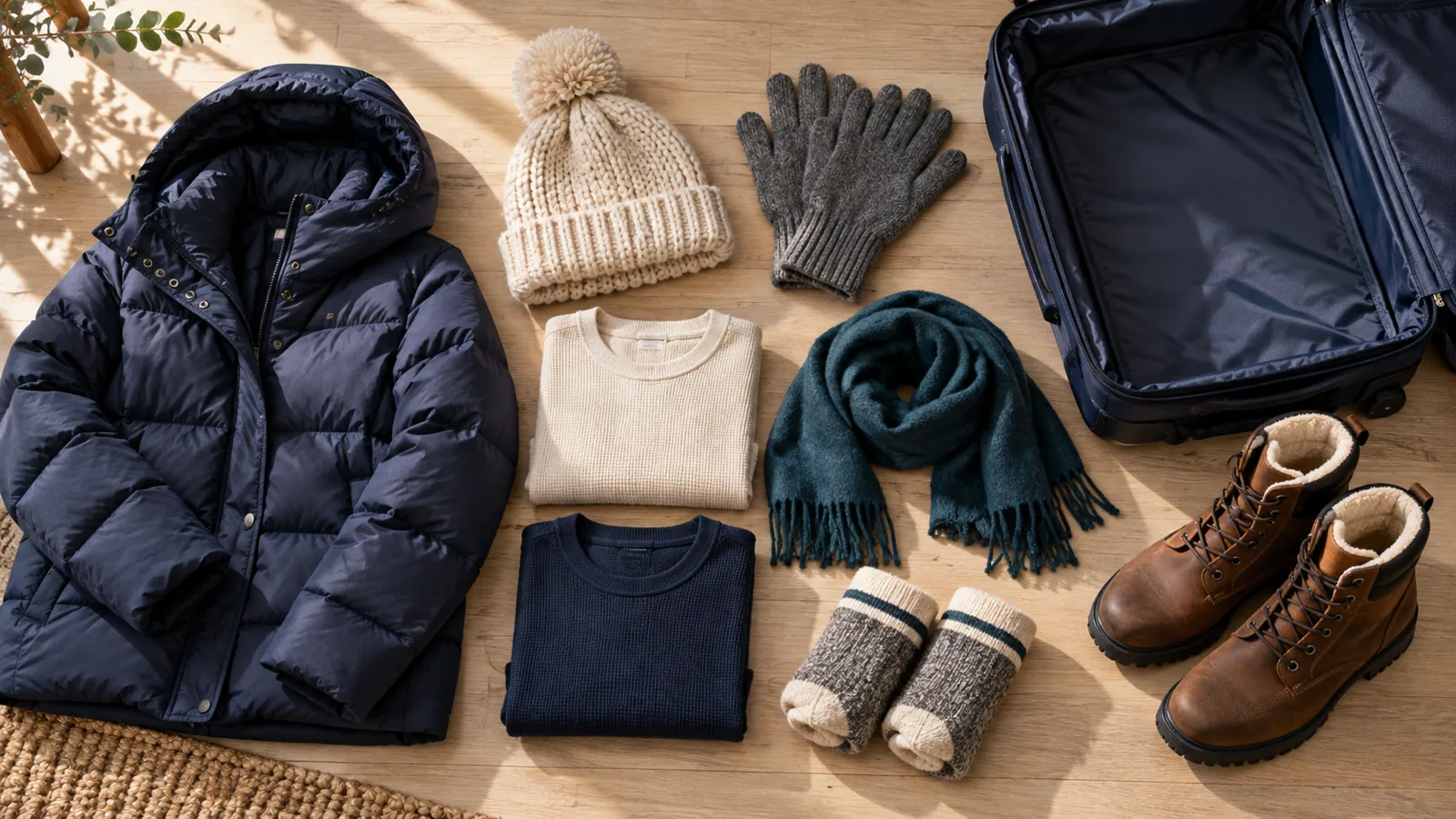
A good cold weather trip packing list covers four things: one warm, windproof coat that you wear rather than pack, thin thermal layers underneath, waterproof shoes with grip, and the small items that matter most in the cold, a hat, gloves, a scarf and warm socks. Everything else is close to a normal trip.
If you live somewhere warm, like much of the Caribbean, the hard part isn't the list. It's that you may not own half of it, and it's hard to picture what 2°C actually feels like when it's 30°C outside your window. So this guide starts with the temperature, then gives you the checklist.
How cold is cold? Match your list to the temperature
Look up the usual daytime high and night-time low for your destination and month, then check the real forecast a few days before you fly. Wind matters too. A windy 5°C can feel much colder than a still one, so treat a windy forecast as one band colder.
| Temperature | What it feels like | What to add |
|---|---|---|
| 10 to 15°C (50 to 59°F) | Cool | A warm jumper, a light jacket and closed shoes |
| 0 to 10°C (32 to 50°F) | Cold | A proper warm coat, a scarf, waterproof shoes, and a hat and gloves for evenings |
| −10 to 0°C (14 to 32°F) | Freezing | Thermal layers, a hat and gloves all day, thick socks and boots with grip for ice |
| Below −10°C (below 14°F) | Very cold | Warmer thermals, mittens, a neck warmer and a face covering. Check local advice before you go |
For a sense of scale, a December day in New York or London is often only a few degrees above freezing, while Toronto and much of Canada regularly dip below it. If you're coming from the tropics, pack as if it's one band colder than the chart says. Your body is used to heat, and cold tends to feel sharper at first.

What to wear on the plane
Winter clothes are bulky, so the heaviest things travel on you, not in your bag. That frees up a surprising amount of space.
Wear the bulk, pack the rest
For a week somewhere around freezing.
Your coat, your boots, your warmest jumper and a scarf. Hat and gloves in the coat pockets.
One cabin bag or small suitcase can hold the rest, with thin thermals rolled into the gaps.
Keep a thin warm layer within reach during the flight, because plane cabins can be chilly, and a pair of warm socks for a long flight. If you have a connection somewhere cold, make sure your coat isn't in the checked bag.
The cold weather clothes checklist
These counts are for seven nights, somewhere around freezing, with one wash midway. Tick them off as you go, or copy the list into your notes.
- 1 warm, windproof coat, ideally with a hood, worn on the plane
- 2 thermal tops and 2 thermal leggings or long johns
- 4 to 5 everyday tops that fit over a thermal
- 2 warm jumpers, fleeces or cardigans, one worn on the plane
- 2 pairs of trousers or jeans, one worn on the plane
- 1 smarter outfit for a dinner or a visit, if you need one
- 5 pairs of underwear, washing midway, or 8 without a wash
- 4 to 5 pairs of thick socks, wool if you can
- 1 pair of warm pyjamas, because heated homes can still feel cool at night
- 1 pair of indoor slippers or thick house socks
Notice there's no heavy second coat and no pile of chunky jumpers. Thin thermals under ordinary clothes do more for less space, and you can peel off a jumper indoors, where the heating is often turned up high. For the maths behind these numbers, our guide to seven nights in one cabin bag shows how one mid-trip wash cuts the count.
Head, hands and feet: the small things that matter most
Warm-climate travellers often bring a good coat and then forget these, and they're the ones you'll feel first. Bare hands, cold ears and damp feet can ruin a day that a coat alone can't fix.
- 1 warm hat that covers your ears
- 1 pair of gloves, plus a thin pair to wear underneath in real cold
- 1 scarf or neck warmer
- 1 pair of waterproof boots or shoes with a grippy sole, worn on the plane
- 1 spare pair of shoes, in case the first pair gets soaked
You may have heard that we lose most of our body heat through our heads. That one is a myth. An uncovered head loses heat much like any other bare skin. But since your head is usually the part left out in the wind, a hat still makes a big difference.
Feet deserve extra care. Snow and slush soak through fabric trainers in minutes, and cold, wet feet make everything feel colder. Pavements can also be icy even when they look clear, so a sole with proper grip matters more than looks.
Skin, lips and health in cold, dry air
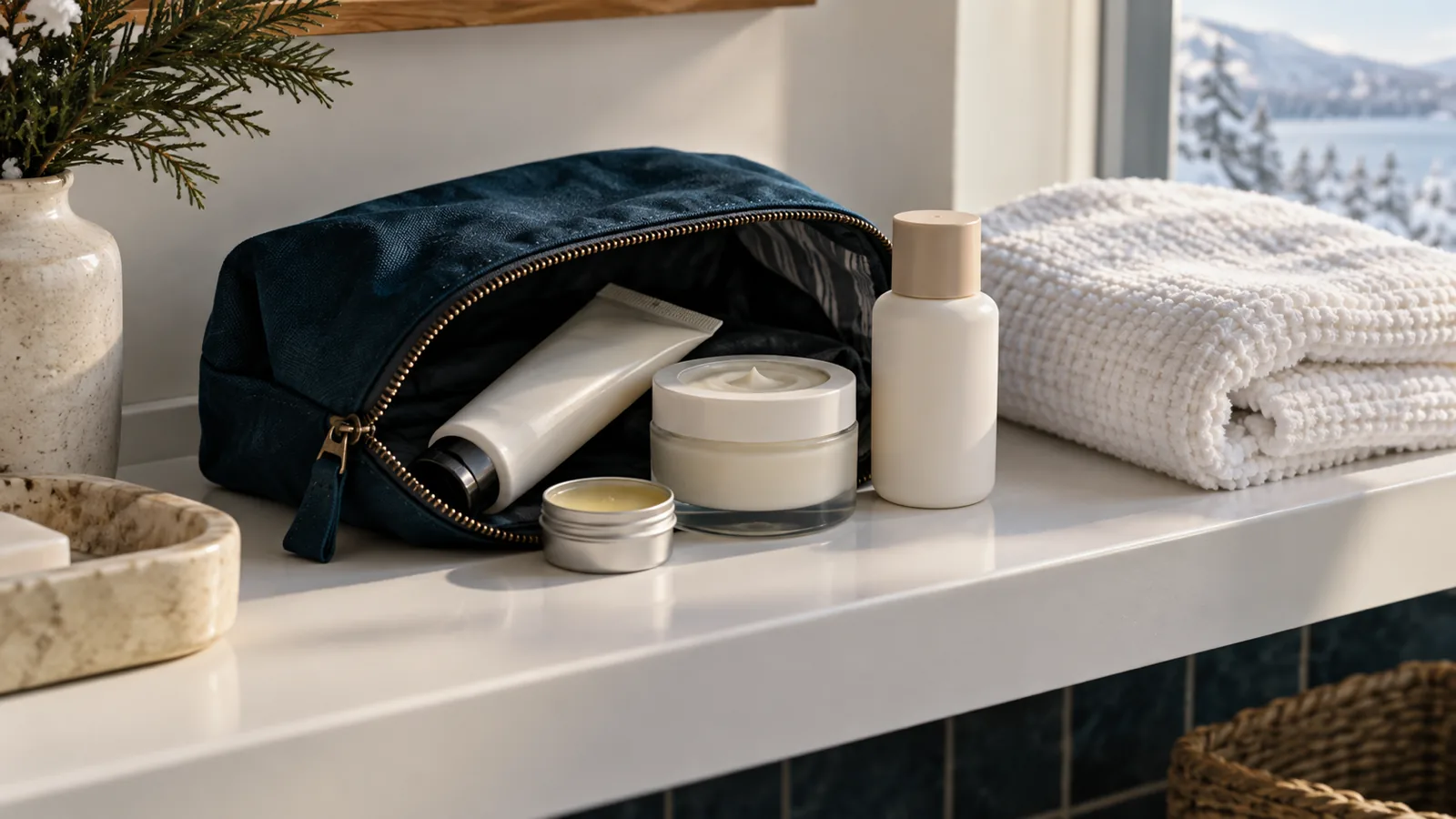
Cold air outside and heating inside both dry your skin, and it can catch you out if you're used to humid heat. Add these to your toiletry bag:
- Lip balm, one in your coat and one in your bag
- A richer moisturiser than you'd use at home
- Hand cream, because gloves come on and off all day
- Sunscreen, if there's snow or you're going up a mountain, as snow reflects the sun
- Tissues, for a cold, runny nose
- Your usual medicines, plus enough for a few extra days in case of weather delays
- A refillable water bottle, as heated rooms can leave you thirsty
Keep liquids within your airline's rules if you're only taking a cabin bag. Our guide to packing a carry-on toiletry kit has the details and some solid swaps that save space.
From JPott Studios
One calm email a month
One useful tip, one free printable or tool, and a short note from our apps. Join and get the free welcome pack: printable trackers, a packing list maker and more.
Tech and travel bits that don't like the cold
Phone batteries tend to drain faster in the cold, and a phone that dies halfway through a walk in an unfamiliar city is no fun. Plan for it:
- A small power bank, kept in an inside pocket where it stays warm
- Your charger and the right plug adapter for the country
- Gloves with touchscreen fingertips, or a pair you don't mind slipping off
- Offline maps of the area, saved before you go
- Your passport, visa or travel authorisation, and travel insurance details
- A small daypack big enough for a jumper you've taken off indoors
Winter weather can delay flights, so keep one change of clothes, your medicines and your chargers in your hand luggage. If a checked bag goes missing for a day, you'll still have what you need.
Buy, borrow or skip: if you don't own winter clothes
Plenty of people in warm countries don't have a winter coat in the wardrobe, and buying a full set of winter clothes for one trip can get expensive. A few ideas:
- Borrow the big things. A coat, boots and a good hat are the most expensive items and the easiest to borrow from family or friends who've lived abroad.
- Buy the small things. Thermals, socks, gloves and a hat are cheap, and they're more personal.
- Consider buying when you land. Coats and boots are easy to find in cold places in winter, sometimes on sale, and you won't have to carry them out. Just have enough to get you from the airport to your stay.
- Skip the specialist kit unless your plans need it. Ski gear and heavy walking boots only make sense for skiing or proper hikes.
Going on from the cold to somewhere warm on the same trip? Pack your summer things in a separate cube or bag so they don't get buried. For the sunny half, our guide to packing for a Caribbean island or our guide to packing for Jamaica will cover it. Or try our free packing list maker for a quick counted list of your own.
If you'd rather not work it out by hand, Neatly Packed, the packing app we make, adds a warm coat and thermal layers when you pick Cold as the weather, and checks the real forecast in the days before you go.
Cold trip questions
What should I pack for a cold weather trip?
One warm, windproof coat, two sets of thermal layers, a couple of warm jumpers, waterproof shoes with grip, and a hat, gloves, scarf and thick socks. Add lip balm, a rich moisturiser and a power bank, and wear the bulkiest items on the plane.
How many layers do I need for winter travel?
Usually three: a thin thermal next to your skin, a warm jumper or fleece in the middle, and a windproof coat on top. Several thin layers keep you warmer than one thick one and are easier to adjust when you go indoors.
Can I pack for a cold trip in just a carry-on?
Yes, for a week or so, if you wear your coat, boots, warmest jumper and scarf on the plane. Thin thermals take up very little space, and one mid-trip wash cuts the rest of the clothes down.
What shoes should I bring somewhere with snow?
Waterproof boots or shoes with a thick, grippy sole. Fabric trainers soak through quickly in slush, and pavements can be icy even when they look clear.
I'm from a warm country. How cold will 0°C feel?
Very cold at first, especially in wind. Cover your head, hands and neck, keep your feet dry, and pack as if it's a little colder than the forecast. Most people find they adjust over the first few days.
From JPott Studios
One calm email a month
One useful tip, one free printable or tool, and a short note from our apps. Join and get the free welcome pack: printable trackers, a packing list maker and more.